
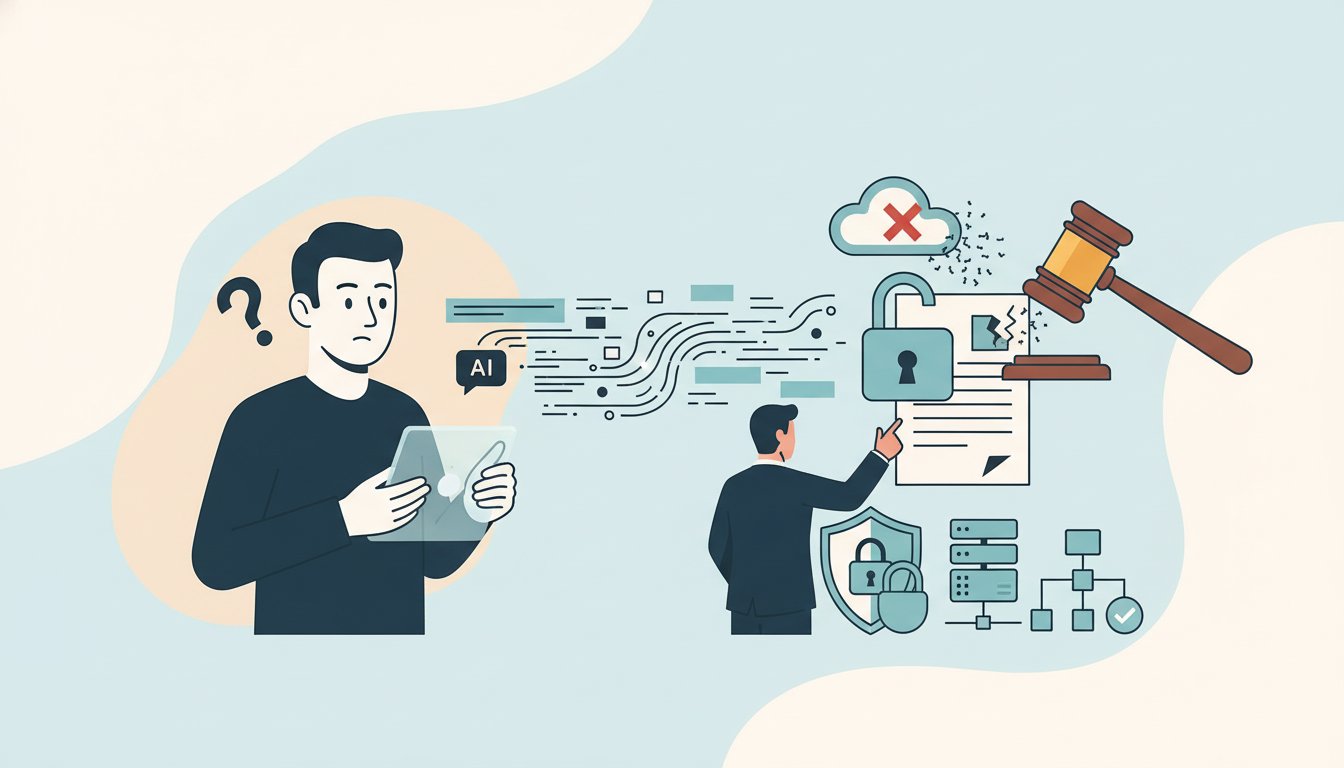
As of March 2026, the legal industry is facing a critical juncture regarding the intersection of artificial intelligence, attorney-client privilege, and regulatory enforcement. Recent developments in both federal courts and regulatory agencies have signaled that the era of informal AI experimentation is ending, replaced by a strict accountability imperative. For law firms and in-house counsel, the challenge is to find ways to automate contract review process without compromising the foundational protections of the legal profession.
The Heppner Ruling and the Privilege Gap
A significant warning for the legal community arrived in early 2026 via the Southern District of New York. In the case of United States v. Heppner, Judge Jed S. Rakoff issued a written opinion concluding that documents prepared by a defendant using a public AI tool—specifically Anthropic’s "Claude"—and subsequently shared with counsel were not protected by attorney-client privilege or the work-product doctrine.
The court’s reasoning centered on two primary factors. First, the defendant used a public platform that did not provide rigorous confidentiality guarantees, effectively constituting disclosure to a third party. Second, the materials were created independently rather than at the specific direction of counsel. This ruling underscores a massive operational risk: when clients use consumer-grade AI to organize facts or draft narratives, they may inadvertently waive privilege before an attorney even enters the conversation.
Regulatory Enforcement and Data Oversight
Beyond the courtroom, regulators in the United States and the European Union are intensifying their scrutiny of how sensitive data is used within AI models. According to a March 3, 2026, survey by the National Law Review, the Federal Trade Commission (FTC) and state attorneys general are increasingly targeting the mishandling of sensitive data, such as health-condition information, in AI contexts.
In the EU, the focus has shifted from policy creation to active enforcement. Regulators are now testing erasure obligations and revisiting Processor Binding Corporate Rules to address the complexities of cross-border data transfers. For firms that intend to automate contract lifecycle management, these evolving rules mean that privacy programs must be specifically tailored to account for AI-specific risks and vendor data-retention policies.
Strategic Mitigations for Legal Teams
To navigate this landscape, legal organizations must move away from consumer-grade tools and toward secure private legal AI solutions that offer enterprise-level confidentiality. Protecting privilege requires a proactive approach to how technology is integrated into the workflow. Counsel should consider the following practical steps:
- Establish clear protocols that require clients to use only firm-approved, enterprise AI tiers that forbid the use of customer inputs for model training.
- Document when AI prompts are made specifically at counsel’s direction to strengthen work-product claims.
- Implement RAG for legal document review to ensure that AI outputs are grounded in verified, internal data sets rather than public training data.
- Utilize professional legal prompt engineering services to create structured, repeatable processes that maintain a clear record of attorney oversight.
- Update privilege logs to include AI-assisted drafts and prompts where a valid claim of protection exists.
Firms must also look at the broader business implications of these technologies. While the efficiency gains are significant, the total AI ROI for law firms must be measured not just in hours saved, but in the mitigation of malpractice and reputational risks associated with data leaks or privilege waivers.
Conclusion
The recent findings from the National Law Review and the SDNY ruling in Heppner serve as a necessary wake-up call. While the drive to innovate is strong, the legal industry cannot sacrifice confidentiality for convenience. By adopting enterprise-grade tools, maintaining strict counsel direction over AI prompts, and staying informed on regulatory shifts, legal professionals can successfully leverage AI while upholding their ethical and professional obligations.
Sources
- The Accountability Imperative: Sensitive Data and AI Oversight – National Law Review
- Federal Court Rules Documents Prepared Using Public AI Tools Not Protected By Attorney-Client Privilege – Barnes & Thornburg LLP via Mondaq
- Update: Judge Rakoff Issues Written Opinion that AI-Generated Documents Are Not Protected by Privilege – Debevoise & Plimpton LLP
- Dear Counsel, Meet Exhibit A: Your Client’s ChatGPT History – Dickinson Wright