
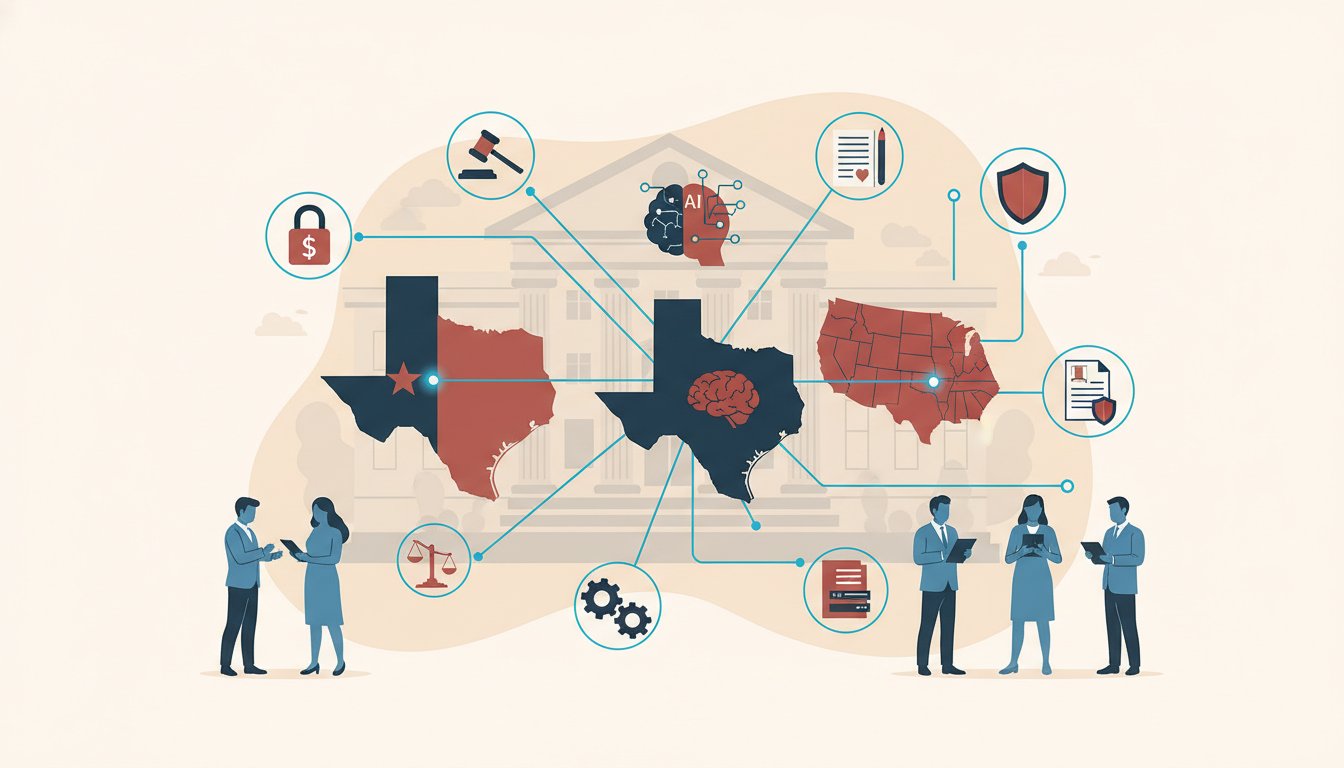
As of early February 2026, the regulatory landscape for artificial intelligence in the United States is shifting from theoretical debate to active enforcement and implementation. Recent industry summaries indicate that state-level activity is now a primary driver of compliance obligations for law firms and their corporate clients. With several state AI statutes and reporting requirements taking effect, the need for custom legal AI development that prioritizes transparency and auditability has become a practical necessity for legal departments.
State-Level Activity and Compliance Exposure
In the first week of February 2026, reports highlighted a surge in state-level legislative and regulatory actions. Specifically, jurisdictions such as Texas and New York have moved forward with measures that increase reporting obligations and liability considerations for organizations deploying automated systems. These developments often include potential civil penalties for non-compliance, forcing IT and legal leaders to reconsider their current technology stacks.
For firms evaluating their software options, the choice between off-the-shelf products and internal projects is critical. Reviewing a build vs buy legal AI decision framework can help counsel determine which path offers the necessary controls to meet these evolving state mandates. Unlike generic tools, bespoke systems allow for more precise adherence to specific state reporting timelines and thresholds.
Managing Risk Through Legal Engineering
The integration of AI into legal workflows—accelerated by new plugins and market tools—demands a sophisticated approach to risk management. Many organizations are now utilizing legal engineering services to design operational controls such as automated audit trails and incident reporting mechanisms. These features are essential for meeting the requirements of new U.S. state AI statutes that began implementation in early 2026.
To mitigate the risks of inaccuracies in legal work product, many firms are turning to a reducing hallucinations with RAG strategy. This approach ensures that the AI remains grounded in verified legal documents and internal datasets, which is vital when navigating the "safety incident" reporting clauses now appearing in state regulations.
Data Privacy and Internal Controls
The recent regulatory updates also underscore the importance of data provenance and retention. Because state and international rules can affect how training data is disclosed or stored, law firms must have a clear understanding of what private LLMs mean for law firms. Relying on a private RAG architecture allows a firm to maintain strict control over its intellectual property and client data while still leveraging the efficiencies of large language models.
Counsel must now revisit:
- Vendor due diligence and indemnity language in licensing agreements.
- Review of training-data practices to ensure compliance with international and state-level disclosure rules.
- The implementation of remediation plans to address civil-penalty exposure.
- The impact of AI-derived evidence on litigation and eDiscovery processes.
Firms that choose to build custom legal AI are often better positioned to adapt to these changes, as they can modify their underlying infrastructure to account for new legislative requirements without waiting for third-party vendor updates.
Conclusion
The regulatory developments observed between February 2 and February 4, 2026, signal a new era of accountability for AI in the legal sector. As state laws in Texas, California, and New York create more rigorous compliance environments, law firms and legal departments must prioritize systems that offer transparency and control. By focusing on precise technical architectures and robust internal controls, legal professionals can navigate this evolving landscape while maintaining their fiduciary and ethical obligations.
Sources
- Last Week in AI — February 2, 2026, Medium (Jonathan Fulton).
- Coming AI regulations have IT leaders worried about hefty compliance fines, CIO.
- GR State Policy Update — Feb 2, 2026, National Association of Wholesaler-Distributors.
- Stock Market Today 04.02.2026, TS2.tech.