
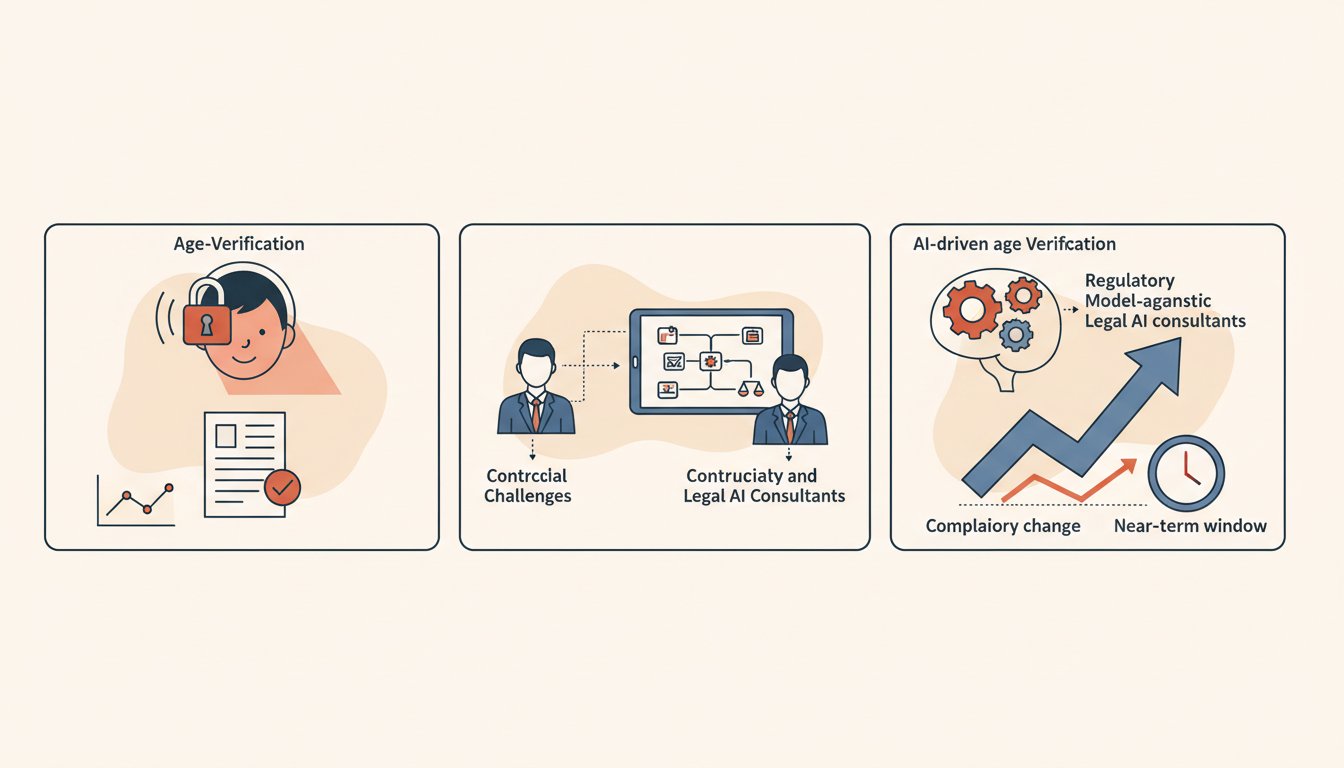
On February 25, 2026, the Federal Trade Commission (FTC) issued a significant policy statement aimed at incentivizing the use of age-verification technologies to protect children online. This move signals a shift in the enforcement posture regarding the Children’s Online Privacy Protection Act (COPPA), specifically for operators of general-audience and mixed-audience websites. The Commission has established a conditional non-enforcement position for operators that collect personal information solely for the purpose of determining a user’s age, provided they meet strict data-handling requirements.
Core Conditions for Non-Enforcement
The FTC’s policy is not a blanket immunity; rather, it is a conditional commitment. To avoid enforcement actions related to the collection of information for age verification, operators must satisfy several criteria:
- Purpose Limitation: Any information collected for age verification must be used exclusively for that purpose and no other.
- Data Minimization and Deletion: Information must not be retained longer than necessary and must be deleted promptly once the verification process is finalized.
- Transparency: Operators are required to disclose to both parents and children exactly what data is being collected for verification purposes.
- Security Safeguards: Companies must employ reasonable security measures to protect the integrity of the collected data.
- Vendor Oversight: Operators must take reasonable steps to ensure that third-party age-verification vendors maintain strict confidentiality and security protocols.
For legal departments, managing these requirements often involves complex technical implementations. Utilizing specialized legal engineering solutions can help firms bridge the gap between regulatory requirements and technical execution.
Impact on Privacy Compliance and Vendor Risk
This policy statement necessitates a review of existing privacy notices and parental consent mechanisms. Legal counsel must now evaluate whether current age-verification workflows—including biometric or AI-driven methods—align with the FTC's mandate for prompt deletion. Failure to reconcile these obligations with existing data retention policies could result in significant litigation exposure.
Furthermore, procurement teams must update data processing agreements (DPAs) to include specific audit and confidentiality clauses for verification vendors. Engaging a model agnostic legal AI consultant can assist in vetting the various technologies available to ensure they meet federal standards without being tied to a single software provider. Implementing transparent legal AI controls can also provide the necessary audit trails to prove compliance during an FTC inquiry.
Regulatory Outlook and Rulemaking
The FTC has announced that this policy statement will remain in effect until the Commission completes a formal review and potential amendment of the COPPA Rule. This indicates a near-term period of regulatory change. Legal teams are encouraged to monitor the Federal Register for upcoming rule amendments that may further refine age-verification standards.
As firms integrate these new technologies, they must remain vigilant against technical errors. Systems designed to reduce AI hallucinations legal risks are essential when deploying automated verification tools that interact with sensitive user data. Ensuring that a legal document generation system produces accurate, compliant disclosures is critical for maintaining the non-enforcement protections offered by the Commission.
Conclusion
The FTC’s February 2026 policy statement represents a material change for online platforms and their legal advisors. By providing a clear framework for age verification, the Commission is encouraging the use of advanced technologies while maintaining strict limits on data retention and use. Law firms and in-house counsel must now act to update their compliance frameworks, vendor contracts, and security protocols to align with these newly enumerated conditions.
Sources
- FTC Issues COPPA Policy Statement to Incentivize the Use of Age Verification Technologies to Protect Children Online, Federal Trade Commission
- Policy Statements, Federal Trade Commission
- Kids' Privacy (COPPA), Federal Trade Commission
- The February Compliance Love Edition of our Privacy, Cyber, and AI Compliance Alert, Hinshaw & Culbertson LLP