The regulatory environment for artificial intelligence in the United States is currently undergoing a period of significant flux as state-level statutes begin to take effect. As legal professionals and in-house counsel look toward the compliance requirements of 2026, the focus has shifted toward specific state mandates, most notably Colorado’s S.B. 205 and various measures in Illinois. These legislative developments are creating a new suite of obligations for employers and the legal teams that advise them.
The Impact of Colorado S.B. 205 and State Mandates
Colorado’s S.B. 205 stands as a landmark piece of legislation targeting "high-risk" AI systems. Slated to take effect in early 2026, the law introduces rigorous procedural requirements, including mandatory bias audits and transparency notices for users. Despite its enactment, the statute has remained a subject of legislative debate. Colorado’s governor previously expressed reservations regarding the potential scope and timing of enforcement, encouraging lawmakers to refine certain provisions before the official effective date.
This state-level activity is not isolated. A convergence of state laws is now focusing on both procedural and substantive restrictions. For legal practitioners, this means an immediate increase in advisory work centered on:
- Establishing bias audit protocols for algorithmic decision-making.
- Developing user notice and transparency disclosures.
- Assessing substantive limits on specific AI applications in hiring and performance management.
Strategic Adjustments for Law Firms and In-House Teams
The practical implications for the legal industry are broad, affecting everything from contract drafting to corporate governance. Firms are increasingly tasked with updating procurement agreements and service-level agreements to allocate regulatory risk between vendors and users. Furthermore, as organizations integrate AI into their workflows, the need for robust AI for law firms becomes apparent in managing the high volume of compliance documentation and regulatory tracking.
In-house counsel are also advising boards on AI risk governance, emphasizing the importance of breach-response plans and compliance timelines. This includes a heavy focus on employment and HR law, where AI-driven hiring tools face new discrimination-risk obligations. Legal teams are finding that implementing a litigation strategy AI tool can assist in assessing potential exposure to these new statutory claims.
Litigation, Enforcement, and Discovery
The emergence of these statutes opens new pathways for regulatory enforcement and private litigation. Claims are expected to rise in areas such as consumer protection, privacy, and algorithmic discrimination. Litigators must prepare for a shift in discovery processes, as AI model outputs and associated data flows become central to evidentiary review. The use of AI document review for litigators is likely to become a standard practice for handling the complex data sets generated by these automated systems.
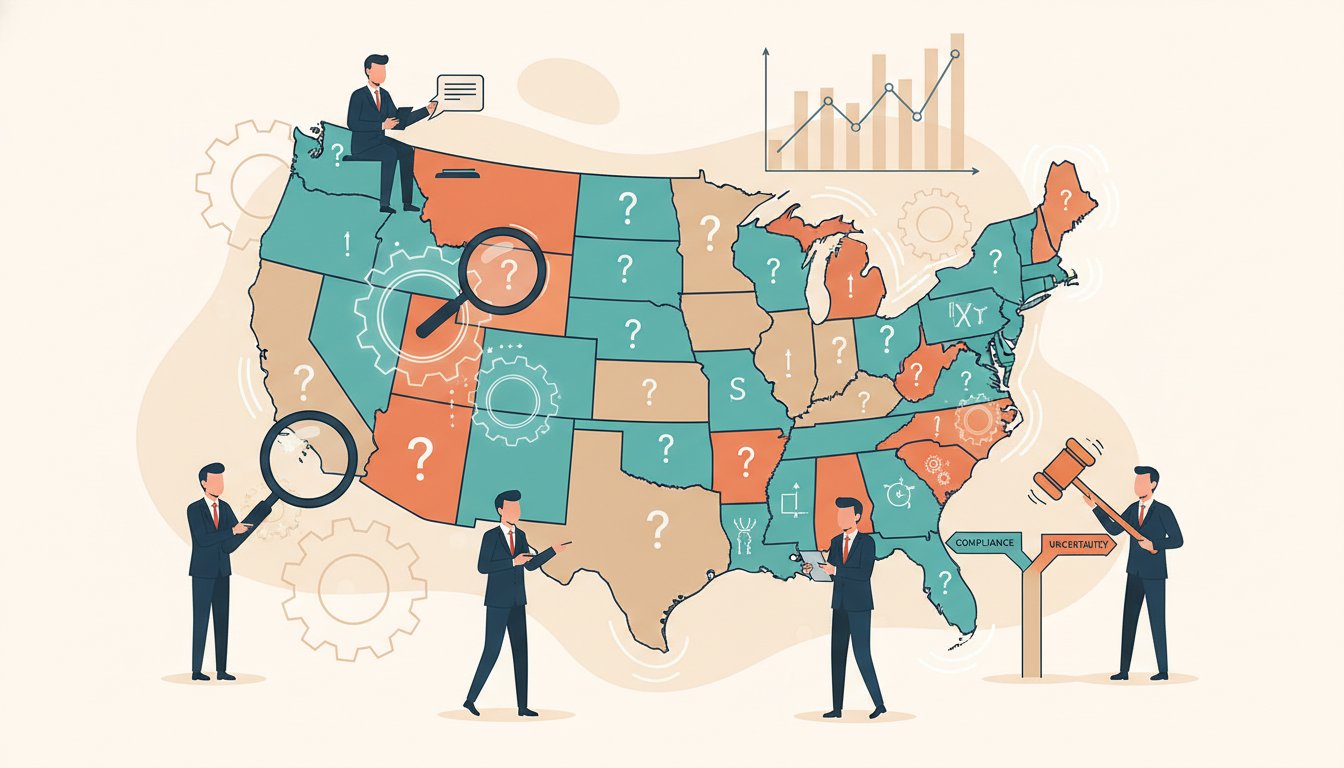
Moreover, the divergence between state laws complicates multi-state compliance. Law firms are seeing a surge in demand for legal AI software that can help navigate the nuances of different jurisdictions, particularly in the context of M&A due diligence where AI products or data practices are involved.
Conclusion
The current state of AI regulation in the U.S. is characterized by a transition from broad policy discussions to concrete statutory enforcement. With major laws like Colorado’s S.B. 205 setting the stage for 2026, legal professionals must be prepared for ongoing legislative tinkering and rulemaking updates. Proactive compliance, revised contractual frameworks, and an awareness of shifting litigation risks remain essential for businesses operating in this space.