
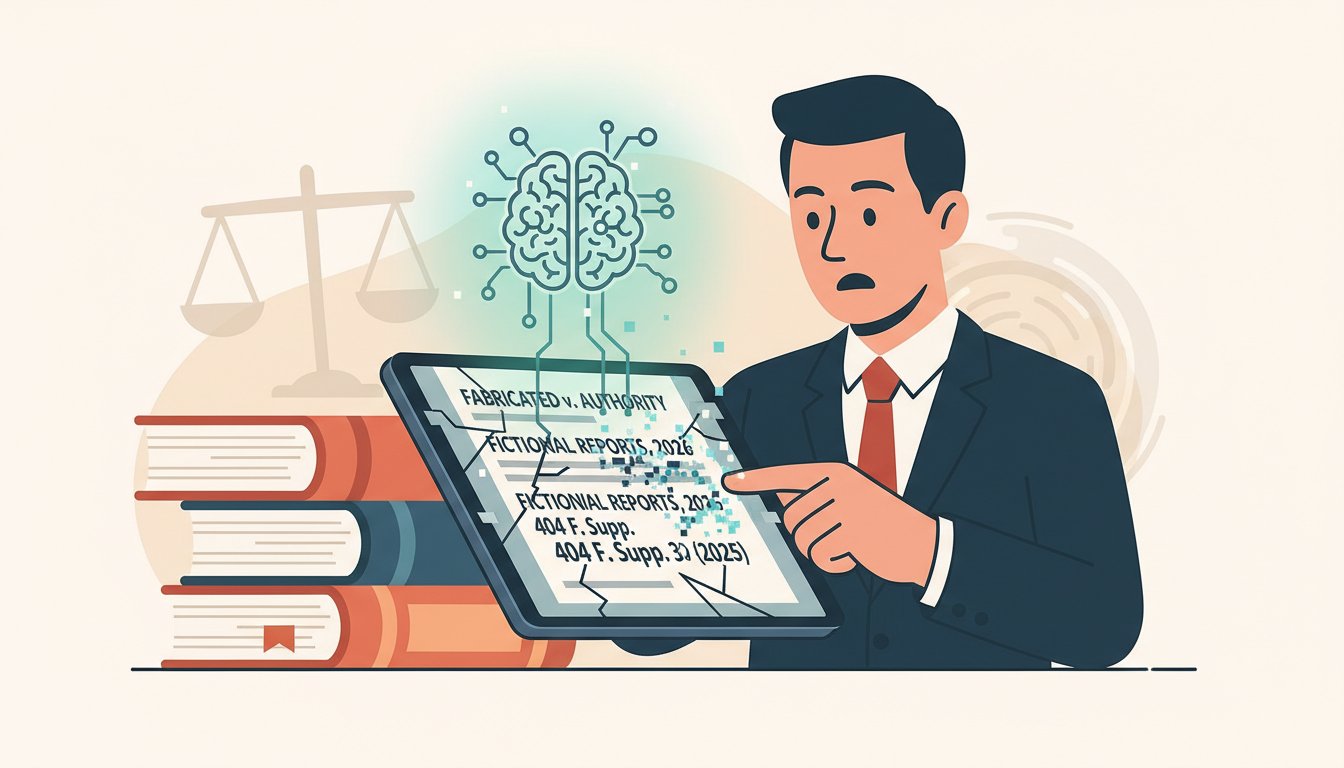
A recent report published on January 24, 2026, has highlighted a critical operational and ethical challenge for the legal profession: the emergence of entirely fabricated legal authorities generated by artificial intelligence. According to the reporting, generative AI systems are now producing fictional cases and citations that have successfully bypassed initial screenings to enter real court submissions. This phenomenon, often referred to as hallucination, presents immediate malpractice risks for law firms and corporate legal departments globally.
Understanding the Threat of AI Hallucinations
The core of the issue lies in the way some generative models prioritize linguistic patterns over factual accuracy. While an AI legal research tool can significantly speed up the identification of relevant precedents, the risk of "hallucinated" content remains a persistent threat. These systems may generate plausible-sounding case names, docket numbers, and even detailed excerpts from opinions that do not exist in any reporter.
In the United States and abroad, judges have expressed increasing alarm as these fabricated materials appear in formal filings. The consequences of submitting such material are severe, ranging from judicial sanctions and the striking of pleadings to potential claims of professional negligence. For firms using litigation AI software to streamline their practice, the duty of competence requires a robust verification process to ensure every citation is anchored in reality.
Global Judicial and Regulatory Responses
Courts are beginning to formalize their expectations for practitioners using automated systems. For example, the South Australian Supreme Court recently published guidelines regarding the use of generative AI. While the court does not currently require lawyers to disclose the use of AI unless specifically asked, it emphasizes that the responsibility for the accuracy of a submission remains entirely with the human practitioner. This mirrors a broader trend where courts are placing the burden of verification squarely on the signing attorney.
In the United States, the regulatory landscape is shifting toward more stringent oversight. Recent federal actions include an Executive Order directing the coordination of a national policy framework for artificial intelligence. This includes the establishment of an AI litigation task force within the Department of Justice to review conflict issues and enforcement strategies. At the same time, international regulators, such as China’s Cyberspace Administration, are drafting measures to police "anthropomorphic" AI services, suggesting a move toward tighter control over how AI interacts with human users and professional systems.
Operational Integrity and Malpractice Prevention
For law firms, the immediate priority is protecting the integrity of their work product. Integrating a legal writing assistant for attorneys can provide significant efficiency gains, but it cannot replace the essential step of manual citation checking. Firms are encouraged to adopt several practical safeguards:
- Implementing mandatory human-in-the-loop verification for every case citation and legal proposition generated by AI.
- Utilizing legal document analysis AI specifically designed for verification rather than just generation.
- Updating internal ethics policies to address the duty of supervision over non-human assistants.
- Conducting due diligence on AI vendors to understand the training data and reliability of the tools being deployed.
Beyond the courtroom, AI safety failures have also led to regulatory probes. High-profile incidents involving the generation of inappropriate or explicit content have triggered temporary bans and investigations in multiple jurisdictions. These events underscore the reputational and legal risks facing both the vendors of these models and the professional entities that deploy them without adequate guardrails.
Conclusion
The integration of generative AI into the legal workflow offers transformative potential, but the recent rise in fabricated legal authorities serves as a necessary warning. As courts and regulators move toward more formal oversight, the legal industry must prioritize evidentiary reliability and professional responsibility. Maintaining a rigorous verification process is no longer just a best practice; it is a fundamental requirement for any practitioner using automated tools in a litigation context. Balancing innovation with human oversight remains the only path toward mitigating the risks of AI-generated fabrications.
Sources
- Artificial Intelligence Now Generates Fabricated Legal Cases That Enter Real Courtrooms – London Daily
- SA Supreme Court publishes formal guidelines for use of generative AI – AdelaideNow
- Ensuring a National Policy Framework for Artificial Intelligence – FilingExplorer
- China drafts rules to police ‘human-like’ AI and emotional companions – ThinkAutomated