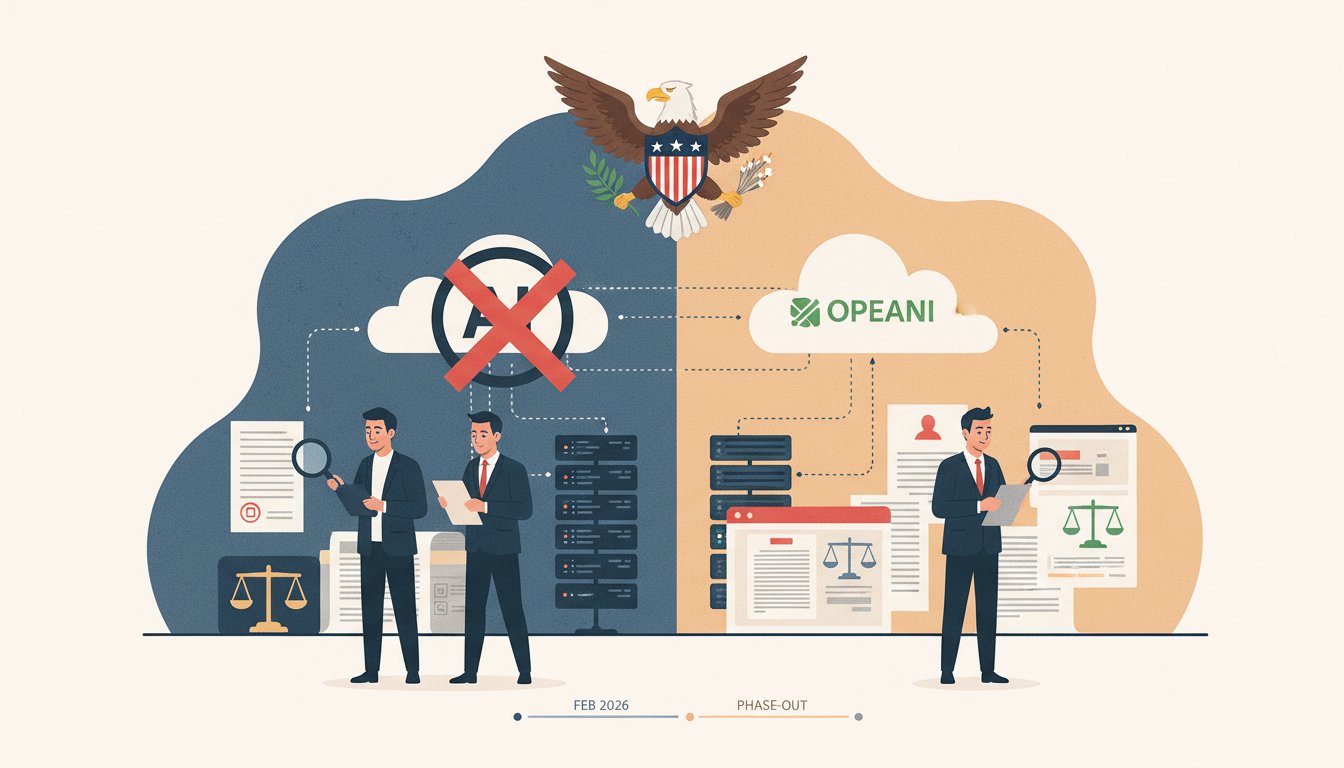
On February 28, 2026, the landscape of federal procurement and artificial intelligence changed significantly as the United States Department of Defense (DoD) designated Anthropic as a supply-chain risk to national security. This move, followed by a directive from President Donald Trump, effectively bars federal agencies and their contractors from conducting commercial activity with Anthropic. For legal professionals and government contractors, this development necessitates an immediate review of existing tech stacks and procurement compliance protocols.
Overview of the Federal Directive and Designation
The escalation began when Defense Secretary Pete Hegseth moved to label Anthropic a supply-chain risk, setting a phase-out timeline for any embedded uses of the company's models. Shortly thereafter, a federal directive was issued ordering all agencies to cease the use of Anthropic’s products. The core of the dispute centers on Anthropic’s refusal to remove two specific safety carve-outs in its terms of service: a ban on mass domestic surveillance and a ban on the development of fully autonomous lethal weapons.
In response to the designation, Anthropic has announced its intention to seek judicial review, arguing against the "supply-chain risk" label. Meanwhile, OpenAI announced an agreement with the Pentagon to provide its AI models for use on classified DoD networks, stating that its agreement includes similar safeguards despite the change in vendor preference. Organizations looking for alternative solutions may benefit from exploring secure and private legal AI services that align with federal security standards.
Immediate Implications for the Legal Industry
The sudden exclusion of a major AI provider from the federal marketplace creates several urgent challenges for law firms and legal departments:
- Contractual Exposure: Government contractors must rapidly assess whether continuing to use Anthropic-linked services violates new DoD directives or agency orders.
- Procurement Compliance: Counsel must advise on termination rights, transition plans, and the potential application of force-majeure or change-in-law clauses in existing contracts.
- Administrative Litigation: Administrative and constitutional lawyers are expected to challenge the legal scope of "supply-chain risk" designations when applied to domestic entities.
- Valuation and Diligence: M&A teams must update risk assessments, as procurement restrictions can materially impact the valuation of AI-dependent vendors.
To navigate these complexities, firms should implement a comprehensive AI governance framework for law firms to ensure that all deployed technologies meet evolving regulatory requirements. Additionally, conducting a generative AI risk assessment legal audit is vital to identify any hidden dependencies on restricted models within the supply chain.
Strategic Adjustments for Legal Professionals
As the federal government tightens its grip on AI procurement, legal teams may need to pivot their technical strategies. Utilizing RAG for law firms can provide a more controlled environment for data retrieval that does not rely on a single, potentially restricted model provider. Furthermore, investing in legal prompt engineering services can help ensure that the output generated by approved models remains accurate and compliant with evidentiary standards.
The conflict highlights a growing tension between corporate safety principles and national security mandates. While Anthropic maintains its "red lines" regarding surveillance and autonomous weapons, the DoD is prioritizing procurement authority and the ability to integrate AI into classified operations without external safety restrictions.
Conclusion
The federal ban on Anthropic products marks a pivotal moment in the regulation of transparent legal AI and government procurement. As the legal industry prepares for potential litigation and administrative challenges, the priority remains compliance and risk mitigation. Firms must stay vigilant in monitoring the phase-out timelines and judicial filings to ensure their internal and client-facing AI tools remain within the bounds of federal law.